It’s a phrase that usually comes with a bit of a shudder: “You need a root canal.” Whether you are a parent sitting in a tiny chair at a pediatric dentist or an adult facing a nagging toothache, the feeling of anxiety is the same. Interestingly, root canals have become incredibly common for both adults and children lately. Between our modern sugary diets and the stress that leads many of us to grind our teeth, dental offices are busier than ever.
The biggest question everyone asks, usually while gripping the armrests of the dentist’s chair is: “How long is this going to take?“
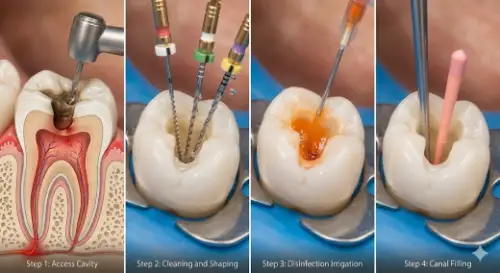
if you are getting a front tooth fixed, you might be out of the chair in 30 to 45 minutes. These teeth are simple, they usually have just one root and one canal to clean. It’s a quick “in and out” process.
However, if it’s a back molar, expect to be there for 60 to 90 minutes. Molars are the workhorses of your mouth. They have three or four canals, and some of them are curved or tiny. Your dentist has to be incredibly patient and precise to make sure every bit of infection is gone. It feels long, but that’s because they are being careful to make sure you don’t have to come back for a “redo.”
It’s not always a “one-and-done”
Sometimes, if the infection is really stubborn or you’re in a lot of pain, the dentist might split the treatment into two appointments.
- Visit 1: They clean out the infection and put in some medicine to kill the germs.
- Visit 2: Once the “fire” (the inflammation) has gone down, they come back to seal it up permanently.
Let’s walk through everything you need to know, from the time spent in the chair to the recovery at home, in simple, human terms.
How Do You Know If You Need A Root Canal?
The body has a very loud way of telling you something is wrong. Usually, it starts with a dull ache that turns into a sharp, localized pain. You might notice:
- Extreme Sensitivity: That wince you feel when drinking cold water or hot coffee that lingers long after the sip is over.
- Swollen Gums: A little “pimple” or bump on the gums near the painful tooth.
- Darkening of the Tooth: If a tooth starts looking grey or dark, the nerve inside might be dying.
- Spontaneous Pain: If your tooth starts throbbing while you’re just sitting still or trying to sleep, it’s a major red flag.
Root canal pain
We have to be honest here: the fear of root canal pain is usually much worse than the procedure itself. Modern anesthesia is a miracle. The real “root canal pain” is actually what you feel before you see the dentist, that deep, infected ache that keeps you up at night. The procedure is actually what makes that pain stop.
How long do root canals take?,
If you’re sitting in the waiting room watching the clock, here is the honest truth: most root canals take between 30 and 90 minutes. It’s a bit of a range, isn’t it? That’s because every tooth is like a unique little puzzle. A front tooth is usually a “straight shot”, it has one canal, so you’re often done in about 45 minutes. But those back molars? They are the heavy lifters of your mouth. They have three or even four tiny, winding canals that your dentist has to clean with extreme care. If the infection is being particularly stubborn, your dentist might even suggest two shorter visits instead of one long one. They do this to make sure every last bit of bacteria is gone before they seal things up. It’s all about doing it right the first time.
Root canal recovery
Once the local anesthetic starts to wear off, you’ll enter the “settling down” phase. For the first day or two, your jaw might feel a little tired from being open, and the area will likely feel tender.
It’s important to remember: this isn’t that scary, sharp “emergency” pain you had before you walked into the clinic. It feels more like a dull bruise. Your tooth just went through a tiny, life-saving surgery, so it’s going to be a bit grumpy for a minute while it heals.
Root canal recovery time
The good news is that most people feel like themselves again within 3 to 5 days. Usually, by the second morning, you’re fine to head back to work or school. If you’re still seeing swelling or feeling intense pain after a full week, don’t just “tough it out”—give your dentist a quick call. They’d rather hear from you and tell you everything is fine than have you sit at home worrying.
Root canal vs extraction
This is the classic fork in the road. Pulling the tooth (extraction) might feel like a quick fix, and yes, it’s often cheaper upfront. But there is a “hidden cost” to losing a tooth. Your teeth work like a team; when one is missing, the others start to shift and tilt to fill the gap. This can actually change your bite and even the shape of your face over time. A root canal lets you keep your “original equipment.” In the world of dentistry, nothing beats the real thing.
Pain after root canal
It is completely normal to feel some soreness. Think about the tiny ligaments that hold your tooth in place they have been through a lot of inflammation from the infection. The cleaning process can stir them up a bit more. Usually, a standard dose of over-the-counter Ibuprofen and a little patience are all you need to get through the afternoon.
How to stop throbbing pain after root canal
If you’re at home and feeling that rhythmic throb, try these “pro tips”:
- Propped Up: When you lie down, use an extra pillow. Keeping your head elevated helps lower the blood pressure in your jaw.
- The Warm Rinse: A gentle salt-water gargle is like a warm hug for your gums. It helps soothe the tissue and keeps things clean.
- Give it a Rest: Avoid chewing on that side of your mouth until your permanent crown is on.
- Cold Therapy: An ice pack on your cheek for 15 minutes can really help take the “heat” out of the inflammation.
How to avoid root canal
The best root canal is the one that never happens. It sounds like a cliché, but the basics really work. Brushing and flossing daily are your best defense. Most root canals start as tiny cavities that were just a bit too shy to show up on your radar. Regular checkups let your dentist catch those little spots and fix them with a simple filling before they ever get near the nerve.
Root canal alternative for mature teeth
For adults, if a root canal isn’t in the cards, you’re usually looking at a dental implant or a bridge. These are amazing inventions, but they are much more involved and can be quite heavy on the wallet. Some people ask about “Pulp Capping” to save the nerve, but once an infection has really moved in, the options get narrow very quickly.
Root canals before and after
- Before: You’re likely exhausted from the pain, can’t enjoy your favorite foods, and your body is stressed out fighting an infection.
- After: Once that permanent crown is in place, the “ghost” of that pain is gone. You can smile, chew, and finally get a full night’s sleep. It’s like getting a piece of your life back.
Can you eat after a root canal?
Yes, but please wait until you can feel your face again! If you try to eat while you’re still numb, you might accidentally bite your lip or tongue, which is a whole different kind of pain you don’t need. Stick to soft, “gentle” foods like mashed potatoes, yogurt, or a smoothie for the first 24 hours. Save the crunchy chips and sticky candy for after your permanent crown is fitted.
Root canal crown
Think of a root canal as saving the “foundation” of the house. Because the tooth no longer has a blood supply, it can become a bit brittle over time. A crown is essentially a custom-made helmet for your tooth. It protects it from cracking and seals it up so no new bacteria can get back inside to cause trouble.
Alternatives to root canal
To be honest, once a nerve is dead or dying, there aren’t many “natural” ways out. It’s essentially a choice between saving the tooth (root canal) or losing it (extraction). While there are some exciting new research areas like “Regenerative Endodontics” for kids, for most of us, the root canal remains the gold standard for keeping our smile whole.
Can you drive after a root canal?
In almost every case, yes. The numbing shot only affects your mouth, not your ability to drive. However, if you’re someone who gets very anxious and your dentist gives you a sedative to help you stay calm, you’ll definitely need a “designated driver” to get you home safely.
How do you prevent a root canal?
It really comes down to your daily rhythm.
- Ease up on sugar: Bacteria love sugar—it’s the fuel they use to create the acid that damages your teeth.
- Drink more water: It’s the simplest way to wash away food bits and keep your mouth healthy.
A root canal is not a punishment it is a solution. It’s the tool that lets you keep your smile and gets you back to your life. If you’re feeling that familiar throb, don’t wait. The sooner you take care of it, the easier it will be.