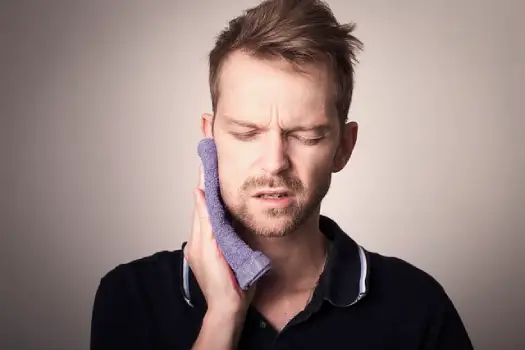
Have you ever sat down to enjoy a meal, only to be interrupted by a sharp pinch near your ear? Or perhaps you’ve woken up with a dull, throbbing ache that makes you wonder, “why does my jaw hurt?” If so, you aren’t alone. Jaw pain is an incredibly common human experience, yet it is one of the most misunderstood signals our bodies send us.
In this guide, we will dive deep into the mechanics of the jaw, the emotional reasons behind tension, and practical steps for both adults and children to find relief.
The Anatomy of a Click: Understanding the TMJ
To answer the question, “why does my jaw hurt?” we first have to look at the incredible engineering inside your face. Your jaw isn’t just a simple hinge; it’s a complex system called the Temporomandibular Joint (TMJ). This joint connects your lower jaw (the mandible) to the temporal bone of your skull.
The Hidden Cushion
Inside every TMJ is a small, firm disc made of cartilage. Think of this as a shock absorber. When you open your mouth to talk or eat, this disc slides forward to keep the bones from grinding together.
When your muscles become too tight—usually due to stress or repetitive habits—they can pull this disc out of place. When the disc eventually slips back into its “home,” it creates a sound. This explains why my jaw pops when I move it. While the sound can be startling, it is essentially your jaw’s way of saying it is out of alignment.
Why Does My Jaw Pop When I Chew?
Many people notice that their symptoms are most obvious during mealtime. If you are asking “why does my jaw pop when I chew,” the answer often involves the muscles of mastication (the chewing muscles).
- Muscle Fatigue: Just like your legs get tired after a long run, your jaw muscles get tired from chewing gum, eating tough foods, or clenching.
- Joint Displacement: If the joint is slightly misaligned, every bite requires the disc to “jump” back into place, causing that signature click.
- Inflammation: If you’ve been asking “why does my jaw hurt” specifically after eating, it may be that the joint tissues are swollen, leaving less room for the joint to move smoothly.
Why Does My Jaw Hurt When I Wake Up?
Waking up should be a time of refreshment, but for many, it begins with facial tightness and a headache. If you find yourself wondering “why does my jaw hurt when I wake up,” you are likely dealing with Bruxism.
What is Bruxism?
Bruxism is the medical term for grinding your teeth or clenching your jaw during sleep. Because you aren’t conscious, you can apply up to 250 pounds of force to your teeth! This massive pressure is a leading reason for why my jaw hurts in the morning.
Signs of Nighttime Grinding:
- Flattened or chipped teeth.
- A tongue that looks “scalloped” on the edges.
- A dull headache starting in the temples.
- Earache-like pain that isn’t actually an ear infection.
Why Does My Jaw Crack or Click Without Hurting?
Sometimes, there is no pain at all—just a loud, annoying sound. You might wonder “why does my jaw crack” or “why does my jaw pop but doesn’t hurt.” In many cases, this is simply a “noisy joint.” Just as some people have knees that crack when they squat, some jaws are naturally noisier than others. However, a “painless pop” is often a precursor to future issues. It suggests that your jaw is under mechanical stress. By addressing it now, you can prevent the transition from a “pop” to a “pain.”
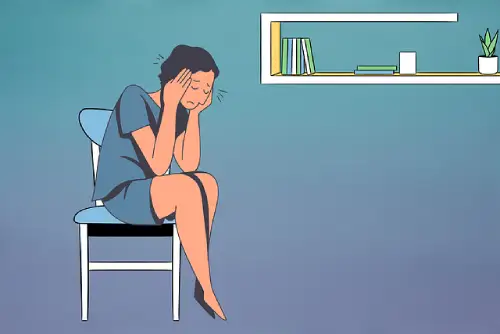
The Human Connection: Stress and the “Held” Jaw
As humans, we carry our emotions in our bodies. When we are anxious, we lift our shoulders. When we are angry, we ball our fists. But most of all, when we are stressed, we clench our jaws.
If you are asking “why does my jaw hurt” during a busy week at work or school, it’s likely because you are “holding it all in.” We grit our teeth to get through hard moments. This physical tension is a direct line to the brain’s stress center. By learning to soften the jaw, you are actually telling your brain that it is safe to relax.
The 3-Finger Test: How Healthy is Your Jaw?
If you are still wondering, “why does my jaw hurt?” there is a simple, 10-second test you can do at home. In the dental world, this is often called the “Three-Finger Test.” It helps you determine if your range of motion is normal or if your muscles are dangerously tight.
How to do the 3-Finger Exercise:
- Prepare your hand: Take your index, middle, and ring fingers of your dominant hand.
- The Goal: You should be able to stack these three fingers vertically and fit them into your mouth comfortably without forcing them or feeling a sharp pain.
- The Result: If you can only fit one or two fingers, your jaw muscles (the masseters) are likely in a state of “guarding” or spasm. This is a huge clue as to why my jaw hurts—the muscles are so tight they are physically preventing the joint from opening.
3 Tips for Success with this Exercise:
- Never Force It: This is a stretch, not a competition. If you feel a sharp pinch, stop immediately.
- Warm Up First: Just like you wouldn’t sprint without stretching, try a warm compress on your cheeks for 5 minutes before trying to increase your jaw’s range of motion.
- Mirror Check: Do this in front of a mirror. Does your jaw swing to one side as you open it? A “zig-zag” movement is a sign that one side of your TMJ is tighter than the other.
Fun Facts for Kids (Kids Learn Zone Special)
Since your jaw is such a cool part of your body, let’s look at some “bite-sized” facts!
- The Strongest Muscle: Did you know the muscle you use to close your jaw (the masseter) is the strongest muscle in the human body based on its weight?
- The Moving Bone: Your lower jaw is the only bone in your skull that can move! All the other bones are locked together like a puzzle.
- Animal Jaws: A Great White Shark has a jaw so strong it can bite with 4,000 pounds of force. Humans only bite with about 160 pounds.
- The Secret Cushion: Your jaw has its own built-in pillow (the cartilage disc) to keep you comfortable while you eat your favorite treats!
How to Heal: Steps to Stop the Pain
Once you stop asking “why does my jaw hurt” and start looking for solutions, you’ll find that small changes lead to big results.
1. The “N” Position
Say the letter “N.” Notice where your tongue goes? It rests gently behind your upper front teeth. This is the “rest position” for your mouth. When your tongue is here, your jaw naturally relaxes. Try to keep your tongue in the “N” position throughout the day.
2. Soft Food Vacations
If your jaw is clicking or cracking loudly, give it a break. For 3–5 days, stick to soft foods like yogurt, mashed potatoes, and smoothies. Avoid chewing gum or eating “tall” sandwiches that require you to open your mouth too wide.
3. Moist Heat
If you are struggling with why my jaw hurts after a long day, apply a warm, damp towel to your cheeks for 15 minutes. This increases blood flow and relaxes the tight muscles.
Conclusion: Listening to Your Body
Your jaw is a gateway. It allows you to nourish yourself, express your feelings, and communicate with the world. When you experience pain or a “click,” don’t ignore it. Whether it’s a child at Kids Learn Zone wondering “why does my jaw click” after a snack, or an adult dealing with the stress of the day, the answer is usually the same: your body needs a moment of rest.
The next time you wonder “why does my jaw hurt,” take a deep breath, drop your shoulders, and let your teeth drift apart. Healing starts with listening.
To learn more, visit why does your body hurt