Welcome to Science Lessons 101! Learn the basics of science from the beginning, discover 20 amazing facts, 7 essential skills, and download our Science 101 PDF for exams. Perfect for curious kids at Kids Learn Zone!
Table of Contents
Introduction: Why Science is Your Greatest Adventure
Have you ever stared at a tiny ant carrying a leaf twice its size and thought, “How does it do that?” Or looked up at the moon and wondered why it follows you when you drive?
If you’ve ever asked “Why?” or “How?”, then congratulations—you are already a scientist!
Welcome to Science Lessons 101. This isn’t just a boring chapter in a heavy school book. Science is a superpower that helps us understand the magic of the real world. From the invisible air we breathe to the massive galaxies spinning in space, science has the answers. Whether you are here because you want to learn science from the beginning or you are looking for a Science 101 PDF to ace your exams, this guide is your secret map to the universe.
1. What are the Basics of Science?
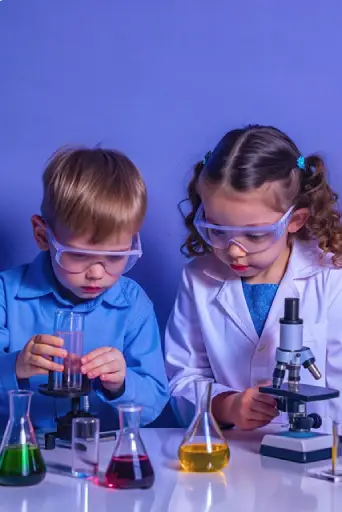
When people ask, “What are the basics of science?”, they often think it’s all about complex math. But actually, the basics are much simpler. At its heart, science is built on four simple ideas:
- Curiosity: The desire to know more about the world.
- Evidence: Using facts and data to prove an idea is true, not just guessing.
- The Scientific Method: A step-by-step “recipe” for solving mysteries (Observe, Question, Test, Result).
- Measurement: Using tools to know exactly how big, heavy, or hot something is.
2. Starting Your Journey: I Want to Learn Science from the Beginning
It’s very common for students to say, “I want to learn science from the beginning,” but they don’t know where to start. If that’s you, don’t worry! Every great scientist started exactly where you are.
To start from zero, you need to look at the three main “neighborhoods” of science:
A. Biology (The Study of Life)
In Science Lessons 101, we learn that Biology is all about living things. If it grows, eats, breathes, or makes babies, it’s biology!
- What you learn: How your heart pumps blood, how plants turn sunlight into food (Photosynthesis), and how tiny germs can make us sneeze.
B. Chemistry (The Study of “Stuff”)
Chemistry is like the “kitchen” of science. It looks at what everything is made of and how things change when you mix them.
- What you learn: Why ice melts, how a cake rises in the oven, and what happens when you mix vinegar and baking soda (Boom!).
C. Physics (The Study of Energy and Motion)
Physics explains how things move and interact. It’s the “action” part of science.
- What you learn: Why things fall down instead of up (Gravity), how electricity lights up your room, and how magnets stick to the fridge.
Comparison Table: Understanding Science at a Glance
Use this table as your Science Lessons 101 quick-reference guide to see the differences between the three main branches.
| Feature | Biology | Chemistry | Physics |
| Main Focus | Living Things | Matter & Reactions | Energy & Motion |
| Key Question | “Is it alive?” | “What’s it made of?” | “How does it move?” |
| Real-life Example | A growing tree. | Rust on a bicycle. | A ball rolling downhill. |
| Basic Concept | Cells & Evolution | Atoms & Molecules | Forces & Light |
3.The “Big 5” Science Discoveries You Need to Explore!
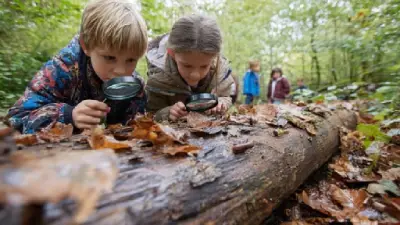
If you want to be a master of Science Lessons 101, you have to look at the topics that are changing our world right now. These five areas are the most searched, most exciting, and most important parts of modern science.
1. Space Exploration: NASA-TV, Black Holes, and Beyond
Space is the ultimate mystery. Every year, millions of people search for the secrets of the universe.
- The Mystery of Black Holes: Imagine a place in space where gravity is so strong that even light cannot escape! It’s like a cosmic trapdoor. Scientists use the HUBBLE telescope to snap incredible photos of these deep-space wonders.
- Watch it Live: Thanks to NASA-TV, you don’t have to be an astronaut to see space. You can watch live rocket launches and see how people live on the International Space Station (ISS) from your own home.
- ASTRONOMY for Beginners: This is the study of everything outside our atmosphere. It teaches us that we are part of a massive, beautiful galaxy.
2. Robotics & Nano Tech: Building the Future
Technology is moving faster than ever, and ROBOTS are at the center of it all.
- What makes a Robot? It’s not just metal and wires. Robots use ELECTRONICS and tiny “switches” called TRANSISTORS to think and move.
- The Power of NANO TECH: “Nano” means something is extremely small—thousands of times thinner than a human hair! Scientists are now using NANO TECH to build tiny machines that could one day enter the human body to fix cells or fight diseases. This is the ultimate blend of Science and Technology.
3. Genetics: The Secret Code of YOU
Have you ever wondered why you have your mother’s eyes or your father’s smile? The answer lies in GENETICS.
- Your DNA Manual: Every living thing has a “instruction manual” called DNA. It decides if you are tall, if you have curly hair, or if you are a fast runner.
- TAXONOMY: Scientists use these genetic codes to group animals together. This is called TAXONOMY. It helps us understand how a tiger is related to a house cat and why they both belong to the same family tree.
4. The Invisible World: Bacteria & Microscopes
There is a whole world living right under your nose that you can’t even see!
- Microscopic Life: Using powerful MICROSCOPES, we can see tiny organisms like BACTERIA and PARAMECIUM. While some bacteria can make you sick, many are actually “superheroes” that help your body stay healthy.
- The Hidden Jungle: A single drop of pond water can look like a busy city when viewed through a microscope lens. Learning to use these tools is a basic skill in any BIOLOGY lesson.
5. The Scientific Method: How to Think Like a Pro
This is the most important tool for any student. If you want to solve a problem—from fixing a toy to winning a science fair—you need the SCIENTIFIC METHOD.
- The 5-Step Process:
- Ask a Question: “Why does this happen?”
- Hypothesis: Make a smart guess.
- EXPERIMENT: Test your guess with a real-life trial.
- Data Sheets: Record your CALCULATIONS and results.
- ETHICS: Always make sure your science is kind to animals and the environment.
4. What are the Basic Science Topics?
If you are looking for basic science concepts, these are the 5 pillars you should focus on first:
- States of Matter: Understanding Solids, Liquids, and Gases.
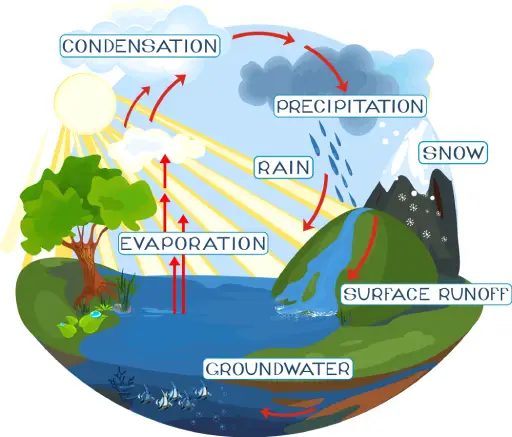
- The Water Cycle: How water travels from the ocean to the clouds and back as rain.
- The Human Body: Learning how our bones, muscles, and brain work together.
- Ecosystems: How animals and plants depend on each other to survive.
- Our Solar System: Understanding the Earth’s place among the stars and planets.
5. The 7 Basic Skills in Science
To think like a real scientist, you need to practice these 7 essential skills:
- Observation: Looking closely at things using your 5 senses.
- Classification: Sorting things into groups (e.g., separating “mammals” from “reptiles”).
- Communication: Using drawings, charts, or words to tell others what you found.
- Measurement: Using a ruler or scale to get the “correct” numbers.
- Inference: Using what you know to explain what you see (e.g., “The cat is hiding, so it must be scared”).
- Prediction: Making a smart guess about what will happen next.
- Experimenting: Testing your ideas in a safe and controlled way.
6. 20 Amazing Science lessons 101 Facts for Students
Science is full of “No Way!” moments. Here are 20 facts that will make you look like a genius:
- Octopuses have three hearts and their blood is blue!
- Bananas are radioactive (but only a tiny bit, so keep eating them!).
- Space is completely silent because there is no air to carry sound waves.
- A day on Venus is longer than a year on Venus.
- Honey never goes bad. Archaeologists found edible honey in 3,000-year-old tombs.
- Sharks have been on Earth longer than trees.
- The Eiffel Tower gets taller in the summer because heat expands metal.
- Rats can laugh when they are tickled.
- Stomach acid is strong enough to dissolve metal.
- A bolt of lightning is 5 times hotter than the sun.
- Plastic can take up to 450 years to disappear from the ocean.
- The human brain has enough electricity to power a small lightbulb.
- Grasshoppers have ears in their bellies.
- It rains diamonds on Saturn and Jupiter.
- A strawberry isn’t actually a berry, but a watermelon !
- Your DNA could stretch to Pluto and back 17 times.
- Trees can “talk” to each other through underground fungus networks.
- Hot water freezes faster than cold water (The Mpemba Effect).
- Ants don’t have lungs; they breathe through tiny holes in their sides.
- The Sun is 1 million times bigger than the Earth.
7. The 10 Best Methods of Teaching Science
At Kids Learn Zone, we believe science should be fun! Here are the 10 best ways to teach or learn science:
- Inquiry-Based Learning: Start with a question and let the child find the answer.
- Hands-on Experiments: Actually mixing things instead of just reading about it.
- Storytelling: Turning the journey of a seed into an exciting story.
- Visual Learning: Using colorful posters, videos, and 3D models.
- Field Trips: Going to the zoo, a park, or a museum.
- Science Journals: Drawing and writing down what you see every day.
- Gamification: Using apps or board games (like Input/Output games) to learn logic.
- Peer Teaching: Letting one student explain a topic to another.
- Analogies: Comparing the heart to a pump to make it easy to understand.
- Problem-Solving: Asking, “How can we make a paper plane fly further?”
8. How to Study Science for Exams
Studying your Science Lessons 101 materials doesn’t have to be stressful.Here is how to do it:
- Don’t Memorize, Understand: If you understand why a plant needs sunlight, you won’t need to memorize the definition of photosynthesis.
- Draw Everything: Diagrams are your best friends. Practice drawing the water cycle or a cell.
- Use the Science 101 PDF: Summarize your notes into a single page.
- The “Rubber Duck” Method: Try to explain a science concept to a toy or a pet. If you can explain it simply, you know it well!
If you are looking for the best school backpacks for kids, choosing a comfortable and lightweight backpack can make school days easier.
9. Science Lessons 101: Resources (PDF & Logins)
We want to help you succeed! Here are the resources available on our site:
- Science Lessons 101 PDF: Download our full guide for easy offline reading.
- Understanding Science PDF: A special workbook for beginners.
10. Frequently Asked Questions (FAQs)
Q: What is the most basic topic in science?
Ans: Usually, it’s the “States of Matter” (Solid, Liquid, Gas) because everything we touch is made of matter!
Q: Why is it called Science 101?
Ans: “101” is a code used for the most basic, introductory course in any subject.
Q: How do I access the Science 101 Login?
Ans: Simply go to the Kids Learn Zone homepage and click on the “Student Portal” button.
Conclusion: Your Science Journey Starts Now!
Science is a never-ending story. It is the curiosity that leads to the greatest inventions—like the phone you are holding or the medicine that makes you feel better. By mastering the basics in Science Lessons 101, you are training your brain to think, solve, and create.
Keep asking “Why?”, keep exploring your backyard, and never stop being curious. The whole world is your laboratory, and you are the scientist!
Suggested For You
How long Does It Take To Learn How TO Swim
Best 10 Homeostasis Worksheet Recognize Normal Parameters