Poor posture is becoming increasingly common among children. Between school, homework, online learning, and screen time, many kids spend several hours sitting every day. Unfortunately, they often sit incorrectly without realizing the long-term effects on their growing bodies.
As parents, we usually pay close attention to our child’s nutrition, sleep, and academic progress, but posture is often overlooked. However, healthy posture is just as important because it supports proper spinal development, reduces muscle strain, and helps children stay comfortable while studying.
Children in Grade 1 and Grade 2 are especially vulnerable because their bones, muscles, and joints are still developing. Simple habits such as slouching, leaning too close to a book, carrying a heavy backpack, or using a tablet while lying down can gradually lead to neck pain, rounded shoulders, and lower back discomfort.
The good news is that most posture problems can be corrected early with a few simple adjustments. You don’t need expensive furniture or special equipment. Small daily changes can make a big difference in protecting your child’s growing spine.
In this guide, you’ll discover the five most common bad posture habits in kids, practical solutions to fix them, and expert tips for creating a healthy study environment at home.

Why Good Posture Matters for Kids
Good posture is more than simply sitting up straight. It allows a child’s bones, muscles, and joints to develop properly while reducing unnecessary strain on the body.
When kids maintain a healthy sitting posture during homework and study time, they enjoy several important benefits.
Benefits of Good Posture
- Supports healthy spinal development
- Reduces neck, shoulder, and back pain
- Improves concentration during homework
- Helps children breathe more comfortably
- Reduces muscle fatigue
- Improves handwriting and desk comfort
- Encourages healthy habits that continue into adulthood
Teaching children proper posture from an early age is one of the best ways to prevent future musculoskeletal problems.
Signs Your Kids May Have Poor Posture
Many posture problems develop slowly, making them difficult for parents to notice at first. Paying attention to your kids sitting habits can help identify issues before they become serious.
Watch for these common warning signs:
- Rounded shoulders
- Head leaning forward while reading or writing
- Frequent slouching during homework
- Complaints of neck, shoulder, or back pain
- One shoulder sitting higher than the other
- Leaning on one arm while writing
- Difficulty sitting upright for more than a few minutes
- Looking down at books or screens for long periods
If these habits continue despite improving your child’s study setup, consider discussing them with your kids pediatrician or a qualified physical therapist.
Ergonomic Checklist: The 90-90-90 Sitting Rule
Before correcting poor posture habits, make sure your child’s study space supports healthy sitting.
A simple guideline recommended by many ergonomics experts is the 90-90-90 Sitting Rule.
Elbows
Your child’s elbows should rest comfortably on the desk at approximately a 90-degree angle while writing or using a keyboard.
Hips
The hips should also remain close to a 90-degree angle, with the lower back supported by the chair.
Knees
The knees should bend naturally at around 90 degrees without stretching or tucking underneath the chair.
Feet
Both feet should rest flat on the floor. If your child’s feet cannot reach the floor, use a sturdy footrest or small wooden stool.
Screen Position
Tablets, laptops, and computer monitors should be positioned at eye level. Looking down at screens for long periods increases the risk of developing tech neck.
Backpack Weight
A school backpack should weigh no more than 10% to 15% of your child’s body weight. Carrying excessive weight every day places unnecessary stress on the shoulders and spine.
5 Bad Posture Habits in Kids (And How to Fix Them)
1. The Dangling Feet Trap
Many children study using adult-sized chairs or dining tables. Because the chair is too high, their feet hang in the air instead of resting on the floor.
Without proper foot support, children naturally slide forward or slouch to maintain balance. This increases pressure on the lower back and hips, making it difficult to maintain good posture.
Why It’s Harmful
When the feet are unsupported:
- The lower back loses stability.
- The pelvis tilts forward.
- Children begin leaning over the desk.
- Back muscles become tired much more quickly.
Over time, this habit can contribute to lower back discomfort and poor sitting posture.
The Ergonomic Fix
Fortunately, this problem is easy to solve.
Use one of the following as a footrest:
- A sturdy wooden footstool
- A stack of hardcover books
- A small storage box
- An adjustable footrest
Once both feet rest firmly on a stable surface, children naturally sit more upright and comfortably.
2. Reading or Using a Tablet While Lying Down
Many kids enjoy lying on their stomach while reading storybooks, watching educational videos, or completing online lessons.
Although this position feels relaxing, it forces the neck into an awkward angle while placing extra pressure on the spine.
Why It’s Harmful
When kids prop themselves up on their elbows, they must constantly lift their heads to see the screen.
This causes:
- Neck stiffness
- Shoulder pain
- Muscle fatigue
- Poor spinal alignment
- Increased risk of developing tech neck
Over time, this habit may affect posture during other daily activities.
The Ergonomic Fix
Encourage your child to study while sitting upright.
Helpful solutions include:
- Use a supportive chair with back support.
- Place books on a book stand.
- Use an adjustable tablet holder.
- Raise learning materials closer to eye level.
These small adjustments reduce neck strain and make studying much more comfortable.
3. Carrying a Backpack on One Shoulder
Many primary school students carry their backpack over just one shoulder because it looks fashionable or feels convenient.
However, this habit places uneven pressure on one side of the body and forces the spine to compensate.
Why It’s Harmful
Using one shoulder strap can lead to:
- Uneven shoulders
- Tight neck muscles
- Upper back pain
- Muscle imbalance
- Poor posture while walking
The heavier the backpack, the greater the strain on the growing spine.
The Ergonomic Fix
Teach your child these healthy backpack habits:
- Always wear both shoulder straps.
- Adjust the straps so the backpack sits high on the back.
- Keep heavier books closest to the back panel.
- Remove unnecessary items regularly.
- Follow the 10%–15% backpack weight rule.
Using both straps evenly distributes weight and helps protect your child’s back.
4. Looking Down at Screens (Tech Neck)
Many children spend hours looking down at tablets, smartphones, or textbooks placed flat on a desk. While this may seem harmless, constantly bending the head forward puts extra pressure on the neck and upper back.
Children have relatively larger and heavier heads compared to their bodies, so even a slight forward tilt can strain developing muscles. Over time, this habit may lead to tech neck, poor posture, headaches, and shoulder pain.
Why It’s Harmful
Looking down for long periods can:
- Increase pressure on the neck muscles
- Cause shoulder and upper back pain
- Lead to rounded shoulders
- Reduce concentration during homework
- Encourage poor sitting posture
The Ergonomic Fix
Help your child keep their head in a neutral position by:
- Using an adjustable tablet or laptop stand
- Raising books with a book holder
- Positioning computer screens at eye level
- Reminding your child to look straight ahead instead of down
Small changes in screen placement can make a big difference in protecting your child’s neck and spine.
5. Sitting Too Long Without Movement Breaks
Many parents feel happy when their child sits quietly and completes homework without getting up. However, sitting continuously for long periods is unhealthy for growing children.
Young bodies are designed to move frequently. Remaining in one position for too long causes muscles to become stiff and tired.
Why It’s Harmful
Long periods of sitting may:
- Tighten back and leg muscles
- Reduce blood circulation
- Increase muscle fatigue
- Cause poor posture
- Lower attention and focus
The Ergonomic Fix
Encourage your child to take a short movement break every 20 to 30 minutes.
Simple activities include:
- Stretching both arms overhead
- Shoulder rolls
- Walking around the room
- Jumping in place
- Gentle side stretches
Even a two-minute break helps relax muscles and improves concentration.
6. Sitting Too Close to the Desk
Some children lean their chest against the desk while writing or reading. This position limits natural arm movement and encourages rounded shoulders.
Over time, it can lead to slouching and poor posture habits.
Why It’s Harmful
Sitting too close to the desk can:
- Round the shoulders
- Strain the neck
- Restrict arm movement
- Cause discomfort during writing
- Increase pressure on the upper back
The Ergonomic Fix
Teach your child to:
- Sit with a small gap between their body and the desk.
- Rest their back against the chair.
- Keep both elbows comfortably on the desk.
- Avoid leaning their chest on the table.
Maintaining a comfortable sitting distance improves posture and makes writing easier.
Simple Daily Posture Exercises for Kids
Correct sitting posture becomes much easier when children have strong muscles that support the spine.
These simple exercises take only five to ten minutes each day and can help improve flexibility, balance, and posture.
Easy Exercises to Try
Shoulder Rolls
Roll the shoulders forward and backward ten times to release tension.
Wall Posture Exercise
Stand with the head, shoulders, and hips touching a wall for 30 seconds. This teaches proper body alignment.
Cat-Cow Stretch
Move slowly between arching and rounding the back to improve spinal flexibility.
Child’s Pose
This gentle yoga stretch relaxes the back, shoulders, and hips.
Arm Circles
Extend both arms and make slow circles to strengthen the shoulders.
Neck Stretches
Gently tilt the head from side to side without forcing the movement.
Practicing these exercises regularly helps children develop stronger posture muscles.
How to Create a Posture-Friendly Study Space
A comfortable study area encourages healthy posture and better concentration.
Here are some simple ways to improve your child’s workspace:
- Choose a chair that supports the lower back.
- Keep both feet flat on the floor or on a footrest.
- Position the desk at elbow height.
- Raise books and tablets closer to eye level.
- Ensure the study area has good lighting.
- Keep frequently used supplies within easy reach.
- Remove distractions that encourage awkward sitting positions.
- Encourage regular movement breaks throughout homework time.
A well-designed study space helps children stay comfortable and focused.
Is a Riser Desk Good for Elementary School Students?
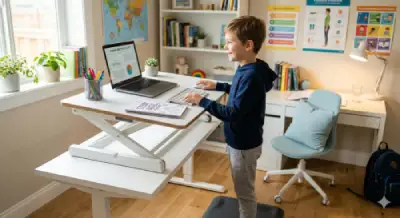
Many parents wonder whether a riser desk or standing desk converter is worth buying.
A properly adjusted riser desk can encourage children to alternate between sitting and standing while studying. This reduces long periods of sitting and promotes healthy movement.
Benefits of a Riser Desk
A riser desk may:
- Encourage better posture
- Reduce slouching
- Improve comfort during homework
- Promote healthy movement
- Support longer study sessions with less fatigue
However, standing all the time is not recommended either. Children should alternate between sitting and standing throughout the day.
If you’re considering this option, read our complete guide on What Is a Riser Desk? Healthy Study Setup for Kids to learn how to choose the right desk for your child’s height and study needs.
When Should Parents Seek Professional Advice?
Occasional slouching is normal, especially when children are tired.
However, professional advice may be helpful if your child:
- Frequently complains of neck or back pain
- Has uneven shoulders
- Finds it difficult to stand upright
- Experiences numbness or tingling
- Develops headaches after studying
- Shows posture problems that do not improve after several months
A pediatrician or physical therapist can assess your child’s posture and recommend appropriate exercises or treatment if needed.
1.Can poor posture affect a child’s growth?
Poor posture does not usually stop a child from growing taller, but it can affect spinal alignment, muscle balance, and overall comfort if ignored for a long time.
2.What is the best sitting posture for a child doing homework?
The best posture follows the 90-90-90 rule, where the hips, knees, and elbows form approximately 90-degree angles. The child’s back should be supported, and both feet should rest flat on the floor or on a footrest.
3.How do I stop my child from slouching while writing?
Check that the desk and chair are the correct height, provide proper foot support, raise books closer to eye level, and encourage regular movement breaks.
4.Are standing desks safe for children?
Yes, when adjusted correctly and used under adult supervision. Children should alternate between sitting and standing rather than standing continuously.
5.Can poor posture cause headaches?
Yes. Poor posture, especially looking down at screens for long periods, can strain the neck muscles and contribute to tension headaches.
6.What type of chair is best for studying?
Choose a chair that supports the lower back and allows the child to sit with both feet flat on the floor while keeping the knees and elbows at approximately 90 degrees.
To learn more about child’s health visit